
Why Hydroseeding Is Used for Construction Site Restoration and Revegetation


Construction projects can transform a property, but once the equipment leaves, there is often another challenge left behind:
disturbed and exposed soil.
Excavation, grading, roadwork, utility installation and new construction can remove existing vegetation and leave large areas vulnerable to erosion from wind and rain.
That is why hydroseeding is frequently used for construction site restoration, land reclamation and revegetation projects throughout Ontario.
It provides an efficient way to establish grass, ground cover and other vegetation over areas ranging from smaller disturbed sites to large commercial projects.
Why Does Disturbed Soil Need to Be Revegetated?
Vegetation does much more than make a finished construction site look attractive.
Healthy plant growth helps protect the soil underneath it.
Without vegetation, exposed soil can be vulnerable to:
wind erosion
rainwater runoff
loss of topsoil
sediment movement
rutting and channels
weed establishment
continued deterioration of disturbed areas
This can be particularly problematic on slopes, roadside areas, drainage channels and large construction sites.
Restoring vegetation helps begin the process of stabilizing that soil again.
How Does Hydroseeding Work?
Hydroseeding involves mixing seed, hydraulic mulch, fertilizer, water and other selected additives into a slurry that is sprayed over prepared soil.
Because the materials are applied together, hydroseeding can cover large or irregular areas efficiently.
The hydraulic mulch also serves an important role during establishment. Once cured, it helps stabilize the soil surface, hold seed in place, retain moisture and protect the seed while germination begins.
As vegetation develops, its root system gradually contributes additional soil stabilization.
Hydroseeding Can Cover Areas Traditional Seeding May Struggle With
Construction sites are rarely perfectly flat rectangles.
Projects may include:
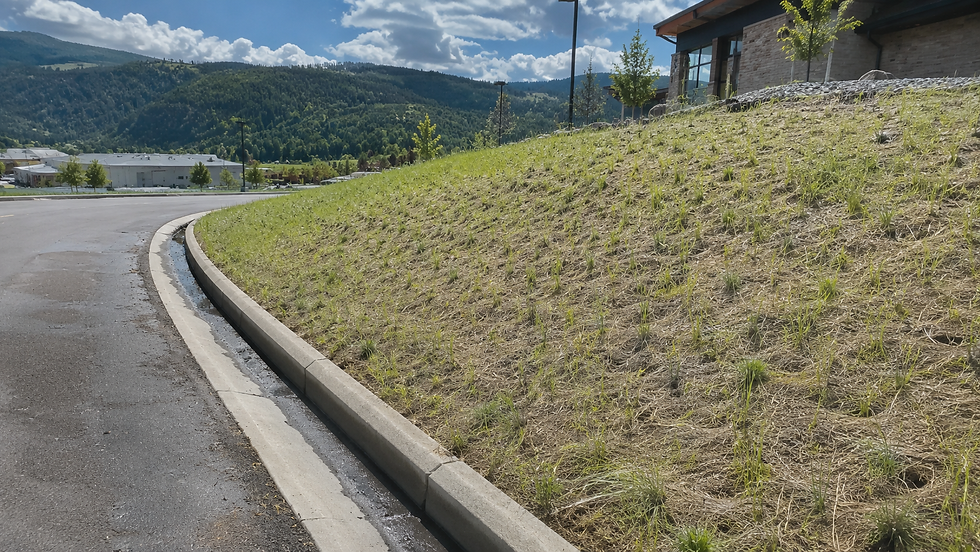
roadside embankments
slopes and hillsides
ditches
large open areas
irregularly shaped ground
areas surrounding commercial buildings
municipal properties
utility corridors
reclaimed or disturbed land
Hydroseeding allows material to be sprayed directly over many of these surfaces.
Specialized erosion-control hydroseeding systems can also be used on challenging slopes where additional soil protection is required.
The Seed Mixture Can Match the Project
Not every revegetation project needs a traditional lawn.
A residential property may require turf grass, while a roadside or reclamation project may need vegetation selected primarily for rapid establishment, erosion protection and low maintenance.
Seed mixtures can be selected for specific site requirements.
For example, roadside and reclamation blends may combine faster-germinating varieties that provide early cover with slower-growing perennial grasses that gradually create longer-lasting vegetation.
All Ontario Hydroseeding also offers ground-cover, conservation, wildflower and custom seed-mixture options for specialized applications.
What About Poor Soil After Construction?
One of the challenges following construction is that the remaining soil is not always ideal for plant growth.
Topsoil may have been removed, subsoil may be exposed, or heavy construction equipment may have altered the site.
In these situations, the soil should be evaluated before revegetation begins.
Depending on conditions, a project may require soil preparation, amendments or specialized biotic soil media designed to improve the growing environment while reducing the amount of additional earthwork and imported soil required.
Choosing the appropriate approach depends on the individual site.
Erosion Control Begins Before Vegetation Is Fully Established
One important consideration with construction-site restoration is that vegetation takes time to grow.
The soil still needs protection while seeds are germinating and young plants are becoming established.
This is why selecting the appropriate hydraulic mulch and erosion-control system is important.
Depending on slope and site conditions, products such as high-performance hydraulic mulches, bonded fiber matrices, flexible growth media and additional erosion-control materials may be used to help protect exposed soil during the establishment period.
Restoring the Site Is Part of Finishing the Project
A construction project is not truly complete simply because the building, road or infrastructure work has finished.
Restoring disturbed ground helps return the surrounding property to a stable, functional and more attractive condition.
Hydroseeding provides a flexible option for revegetating everything from residential construction areas to commercial developments, roadsides and large-scale reclamation projects.
All Ontario Hydroseeding & Ice Control provides hydroseeding, revegetation, reclamation and erosion/sediment-control services throughout Southern Ontario and has completed projects across Ontario and Canada.
If your construction, commercial or land-restoration project requires revegetation or erosion-control support, contact us to discuss the site and request a no-obligation estimate.


Comments